Translate

Showing posts with label Netherlands. Show all posts

10 Top-Rated Tourist Attractions in Utrecht, Netherlands


Utrecht, the fourth largest city in the Netherlands and the capital of the province of the same name, lies on the geographical divide between the country's fenlands and sandy heathlands. This position favored the development of the town over the centuries as the heathlands, lying higher, were out of reach of the North Sea's storm tides. From very early times, Utrecht was one of the principal political, economic, and cultural centers of the Netherlands, the seat of the provincial administration, and home to a famous university founded in 1636. Tourism also makes a significant contribution to the economy, and the picturesque Old Town with its numerous historical buildings surrounded and intersected by canals attracts large numbers of visitors.


1 St. Martin's Cathedral

St. Martin's Cathedral
Share:
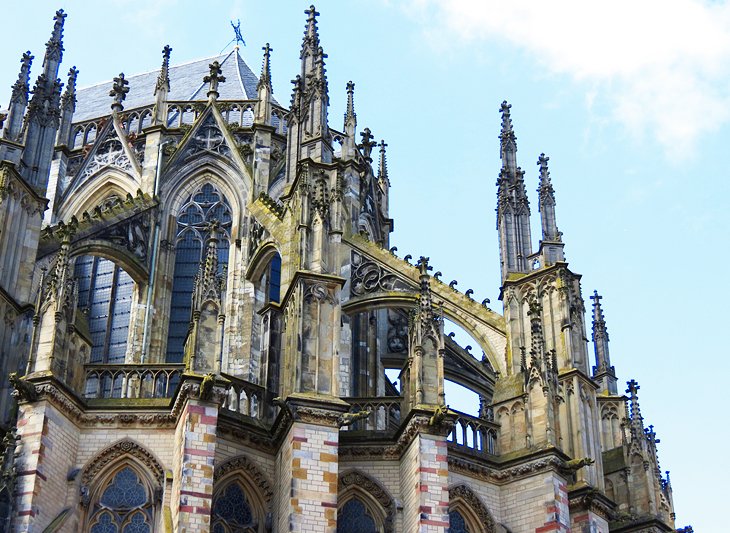
In the heart of Utrecht lies Cathedral Square, the Domplein, where you'll find St. Martin's Cathedral (Domkerk), one of the most important churches in the Netherlands. Begun in 1254 on the site of an earlier Romanesque church, the cathedral today consists of the 14th-century choir, the 15th-century transepts, and two chapels. The original much larger structure incorporated the massive nearby Domtoren, the tower that became separated after the destruction of the nave during a thunderstorm in 1674. The ruins were only cleared away in 1826 when the Domplein was laid out, with restoration finally completed in 1988. Highlights include old tombs and a crypt known to contain the internal organs of Emperors Conrad II and Henry IV, who died in Utrecht. Of particular note is the picturesque 14th-century cloister linking the cathedral with the university: above its windows are scenes from the life of St. Martin, the patron saint, while in the center of the beautiful Cloister Garden is a fountain with a bronze figure of a monk.
Address: Achter de Dom 1, 3512 JN Utrecht
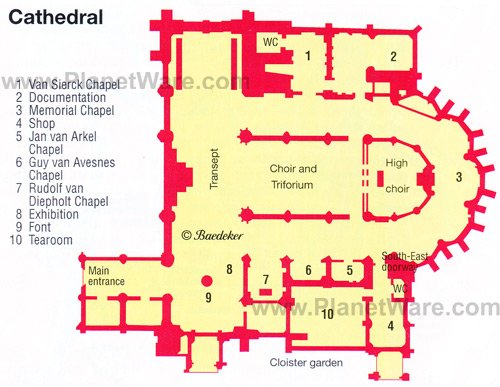
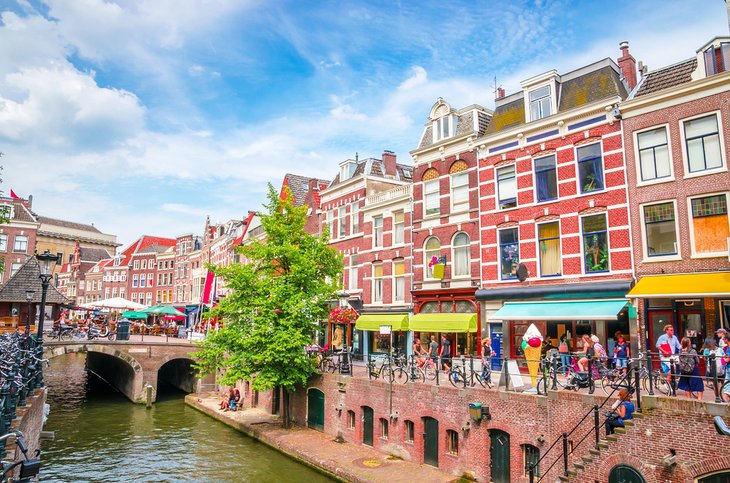
Official site: www.domkerk.nl/domchurch/index.html Utrecht Cathedral - Floor plan map Utrecht Cathedral Map

2 Editor's Pick The Domtoren: The Cathedral Tower

Utrecht cityscape with cathedral tower
Share:
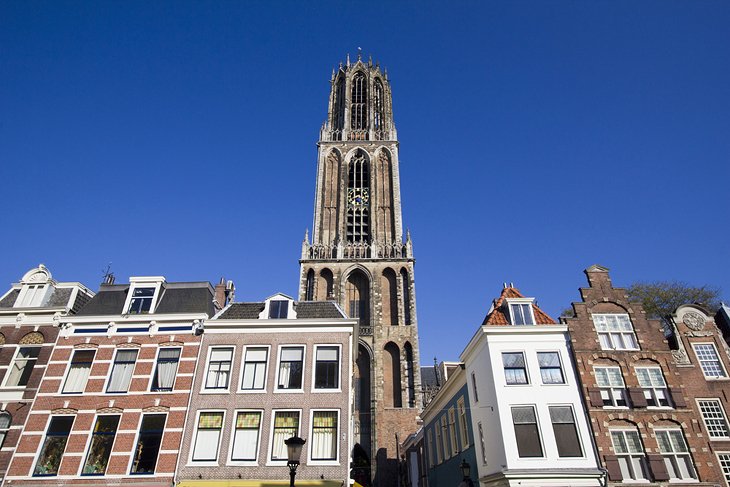
Looming high over the old city of Utrecht is the Domtoren, the massive tower that was separated from the Cathedral of St. Martin after the devastating storm of 1674. Built between 1320 and 1382, it stands 112 meters high and houses an impressive carillon of 50 bells, many of them centuries old. Still the tallest church tower in the Netherlands, its viewing galleries offer magnificent panoramic vistas of the old city and the Domplein (the 465-step climb is worth it as you'll also get to see the bells up close). Two chapels can be visited within the tower: St. Michael's, the Bishop's domestic chapel, and the Egmond Chapel, home to an exhibition on the history of this spectacular structure.
Address: Domplein 21, 3512 JE Utrecht
Official site: www.domtoren.nl/en

3 Museum Catharijneconvent

Museum Catharijneconvent exhibit
Museum Catharijneconvent exhibit Niels
Share:
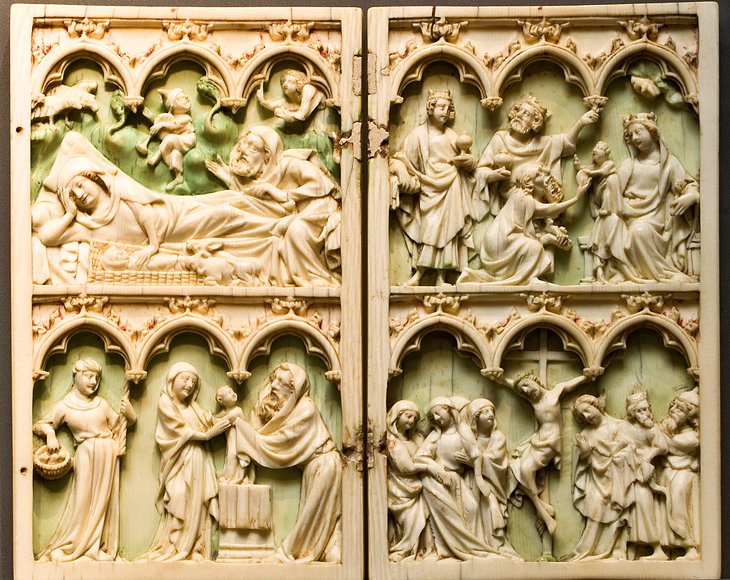
In the former hospice of the Order of St. John, Museum Catharijneconvent deals with the history of Christianity in the Netherlands. Opened in 1978, it's the country's largest collection of medieval art treasures, with sections devoted to church interiors, religious beliefs, and medieval monasteries. In addition to a large collection of 17th- and 18th-century material, other exhibits include valuable books and manuscripts, and a model of the original St. Martin's Cathedral with explanations of its history. Also on site is a display of embroidered Flemish church vestments of the late Middle Ages. (English language guided tours are available.)
Address: Lange Nieuwstraat 38, 3512 PH Utrecht

4 Castle de Haar

Castle de Haar
Castle de Haar
Share:
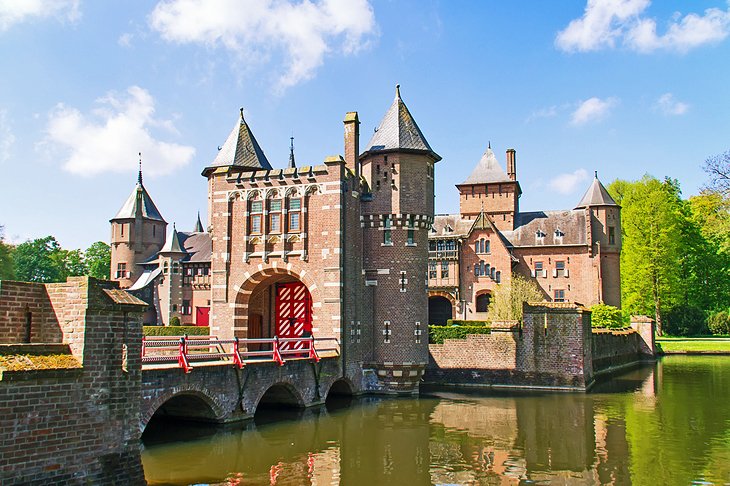
Built by Dutch architect PJH Cuypers, Kasteel De Haar is not only the largest castle in the Netherlands, it's widely considered to be the most attractive thanks to its fairytale good looks. It is so large that when it was built in 1822, the whole village of Haarzuilens had to be moved. Highlights of a visit - the castle is just 16 kilometers west of Utrecht - are its large collection of antiquities, furniture, paintings, and tapestries, along with its rich décor including ornate wood carvings and tableware and a rare Japanese coach especially designed for women. The grounds, too, are wonderful to explore, and comprise some 250 treed-acres, along with fountains and a lovely formal garden.
Address: Kasteellaan 1, 3455 RR Haarzuilens

5 Museum Speelklok

Museum Speelklok exhibit
Museum Speelklok exhibit bertknot
Share:
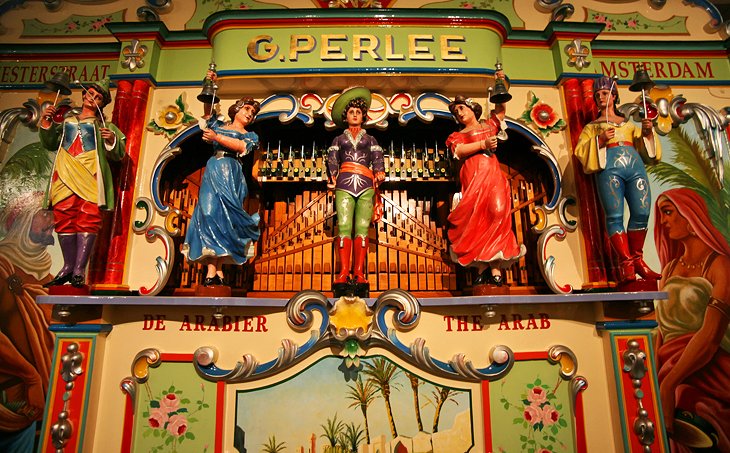
One of the more unusual of Utrecht's tourist attractions is Museum Speelklok, a museum dedicated to music boxes and barrel organs. Displays include mechanical musical instruments from the 18th century to the present day, as well as domestic instruments such as tiny music boxes to massive fair organs, most of which can still be played. Other highlights include examples of musical clocks, pianolas, and a turret clock with a carillon, along with the opportunity to peek behind the scenes at the restoration work performed in the workshops. English language guided tours, including demonstrations, are available.
Address: Steenweg 6, Utrecht

6 Centraal Museum

Centraal Museum
Centraal Museum Franklin Heijnen
Share:
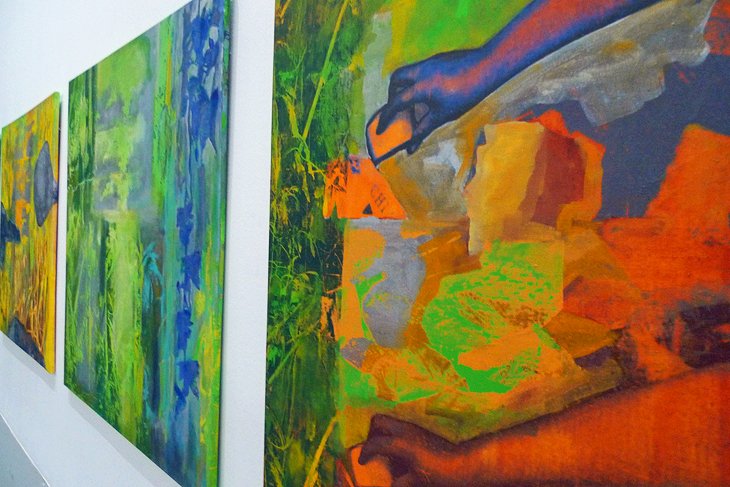
Spread between the remnants of a former convent and the city's old Artillery Stables, Utrecht's excellent municipal collections are well worth a visit. Housed in the Centraal Museum, the exhibits include the provincial archaeological collections and works by Utrecht-based painters from the 15th century onwards, including the Romanists, a group influenced by the Italian Renaissance and led by Jan van Scorel. Other schools represented are the Mannerists, represented by Abraham Bloemaert, who had an enduring influence on the Utrecht Caravaggisti (stylistic followers of Caravaggio). The museum also has a collection of costumes from the 18th century to the present day, along with rooms furnished in period style, sculptures, silver, and a collection of material on the history of the city. A rare 17th-century dollhouse with rooms decorated in chintz from the Dutch East Indies is also worth seeing.
Address: Nicolaaskerkhof 10, 3512 XC Utrecht
Official site: www.centraalmuseum.nl/en/

7 The Railway Museum

The Railway Museum
The Railway Museum Robert Warnaar
Share:
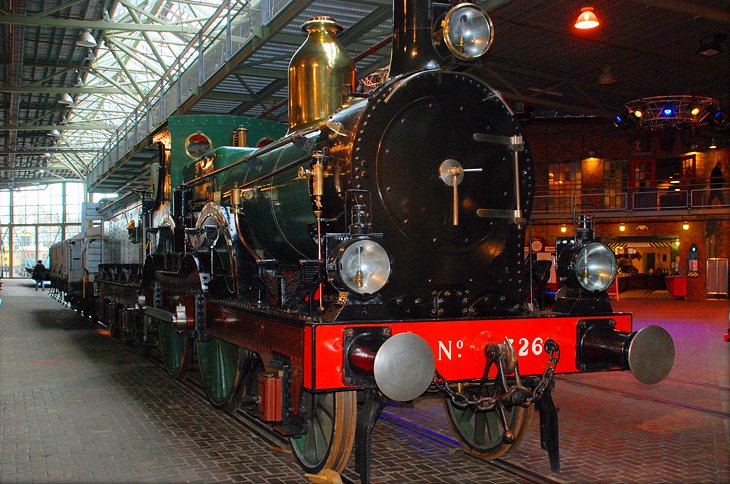
In the old Maliebaanstation, Utrecht's Railway Museum (Spoorwegmuseum) is a must-see for train buffs. Highlights of this large, well-stocked attraction include a cross section of the country's transit history, particularly railroads and tram systems, with plenty of models and old vehicles. Exhibits deal with the early years of railways, the heyday of the 1900s, and an operational workshop. In addition to the museum's impressive collection of locomotives and rolling stock, kids will love the model railway and playground.
Address: Maliebaanstation, 3581 XW Utrecht

8 The Kaiser's House in Doorn

Huis Doorn display
Huis Doorn display Hans Splinter
Share:
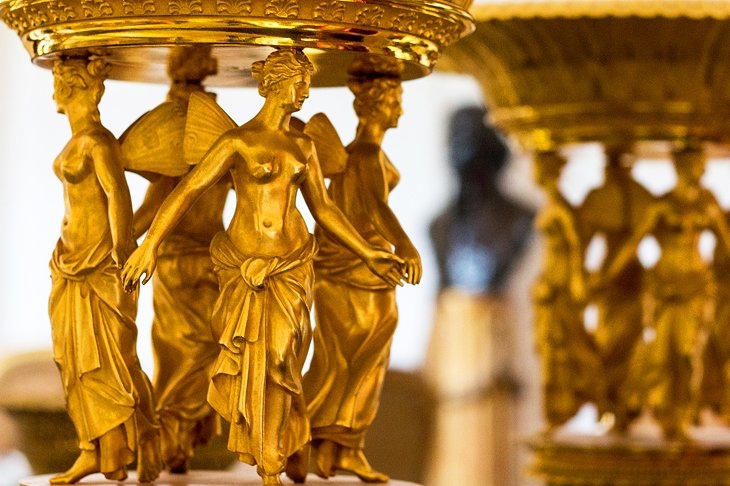
In the picturesque little town of Doorn is the last home of Germany's Kaiser Wilhelm II, Huis Doorn. Forced into exile after defeat in WWI, the Kaiser purchased Huis Doorn in 1920 and lived there until his death in 1941 (he's buried in a mausoleum on the grounds). Originally a medieval castle, the house was rebuilt in classical style in the 18th century, with only minor alterations since. Set in a large and beautiful park, the house is open to the public as a museum and has been preserved exactly as it was in the Kaiser's day, right down to the original furniture and furnishings, the Kaiser's personal possessions (including a collection of snuff-boxes belonging to Frederick the Great), uniforms, photos, and paintings.
Address: Langbroekerweg 10, 3941 MT Doorn
Official site: www.huisdoorn.nl/eng/

9 The Oudegracht

The Oudegracht
The Oudegracht
Share:
A highlight of a visit to Utrecht is strolling along the beautiful Oudegracht, the old canal running through the city center. Starting in the southeast section of the city, the Oudegracht traces, in part, what was once the original route of a section of the Rhine, while the northern section includes segments of a canal built around 1000 AD that connected the Rhine to the River Vecht. Once Utrecht's network of locks was completed in 1275 the shores of the canal began to be settled, with numerous quays, wharves, and warehouses added. Today, many of these old buildings have been turned into restaurants, cafés, galleries, and boutique shops.

10 St. Pieterskerk

St. Pieterskerk
St. Pieterskerk YIP2
Share:
Just a short walk north of St. Martin's Cathedral, in Pieterskerkhof, stands St. Pieterskerk, the first of the town's churches to be built. Consecrated in 1048 and notable for its two Romanesque towers, the church features a crypt with a sarcophagus of the founder, Bishop Bernold. Other notable features are the capitals of the columns in the nave, the wall paintings in the north aisle, and the 12th-century reliefs created in the Maasland style.
Address: Neude Janskerkhof en Domplein, Utrecht
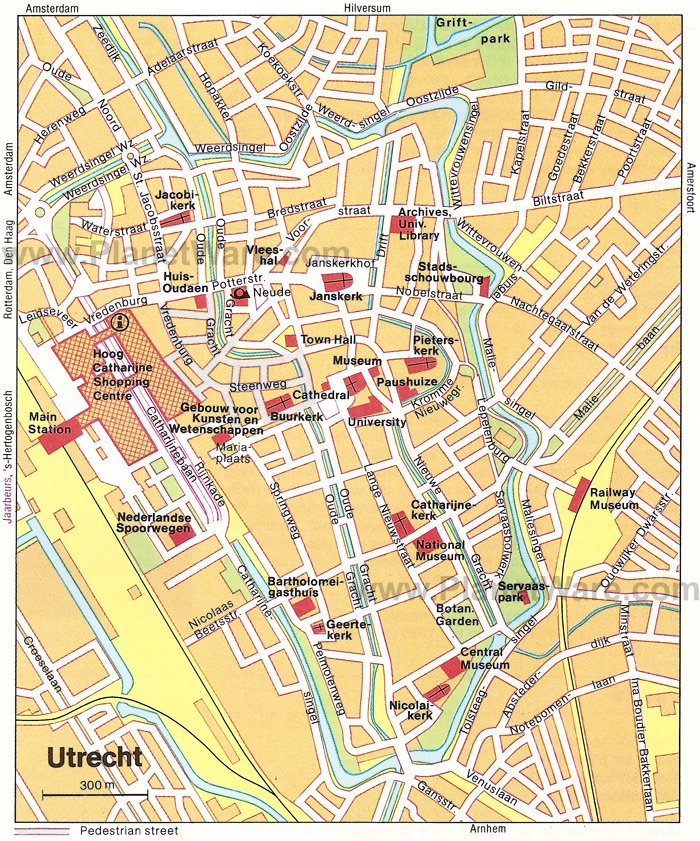
Utrecht Map - Tourist Attractions Utrecht Map - Attractions
10 Top-Rated Tourist Attractions in Leiden, Netherlands


The university town of Leiden (or Leyden in English) is one of the oldest and most picturesque towns in the Netherlands. Leiden lies in an extensive flower growing area, the produce of which is marketed in the town and surrounding region. It's also one of the leading cultural centers in the Netherlands. In addition to its famous Library University, the town is home to a number of other research institutions, including the National Herbarium, with its vast collections of dried plants, and the Royal Institute of Linguistics and Anthropology. The town is also famous as the birthplace of several great painters from the 16th and 17th centuries, including Lucas van Leyden, Rembrandt, Jan Steen, Jan van Goyen, and Frans van Mieris.


1 The Old Castle: Burcht van Leiden

The Old Castle: Burcht van Leiden
Share:
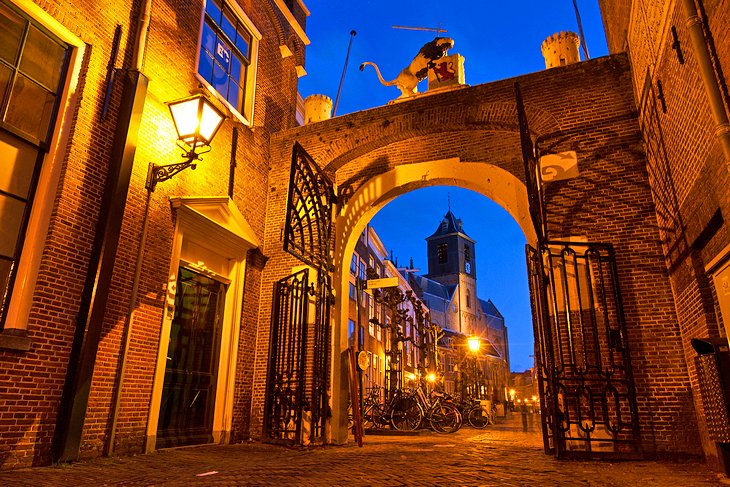
Accessible through an interesting old gateway displaying the figure of a lion with the town's coat of arms, Leiden's castle (Burcht van Leiden) is a must-visit. Perched atop a 12-meter-high mound built to provide a refuge from flooding, this 11th-century fort was protected by a circuit of walls 35 meters in diameter, along with two canals, one of which can still be seen at the foot of the hill, as well as a sentry-walk around the walls. In the 17th-century, a tower was built bearing the arms of the burgomasters, who between 1651 and 1764 were also governors of the castle. From the castle, panoramic views extend over the surrounding area.
Address: Burgsteeg 14, Leiden 

2 Editor's Pick Museum Boerhaave

Museum Boerhaave
Museum Boerhaave bertknot
Share:
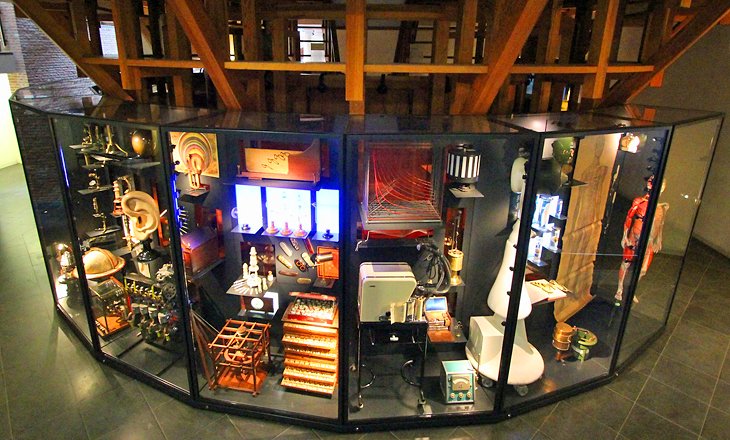
The wonderful little Museum Boerhaave offers a fascinating look at the history of medicine and science through the centuries. In a former convent, this excellent tourist attraction boasts a large collection of apparatus developed at the University of Leiden for scientific research and used across Europe. Named after Dutch physician Herman Boerhaave, a famous botanist and university professor whose students included Peter the Great and Voltaire, the museum also includes a fascinating collection of "Gapers," carved wooden heads depicting the effects of swallowing medicines, along with the Leiden Anatomical Theater where dissections of cadavers were performed. (English language guided tours are available.)
Address: Lange Sint Agnietenstraat 10, 2312 WC Leiden

3 National Museum of Antiquities

Sarcophagus of Ahmose
Sarcophagus of Ahmose Jan
Share:
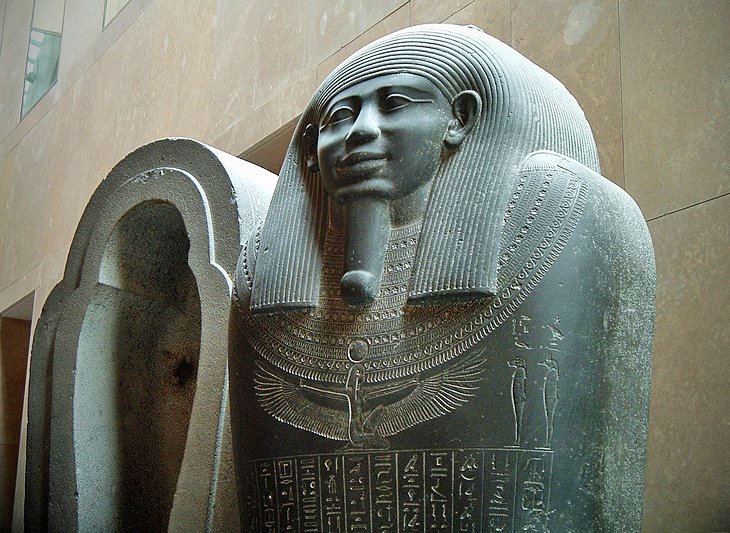
The National Museum of Antiquities (Rijksmuseum van Oudheden) features numerous archeological exhibits from Egypt and the Near East, as well as from Greek and Roman periods. Founded in 1818, this first-rate attraction features numerous sculptures, ancient vases, and smaller objects from prehistoric to Roman times. In the courtyard of the museum is the Nubian temple of Taffah, presented to the country by President Sadat in 1979 in gratitude for Dutch help in saving monuments threatened by the construction of the Aswan Dam.
Address: Rapenburg 28, 2311 EW Leiden

4 Hortus Botanicus Leiden

Hortus Botanicus Leiden
Hortus Botanicus Leiden zoetnet
Share:
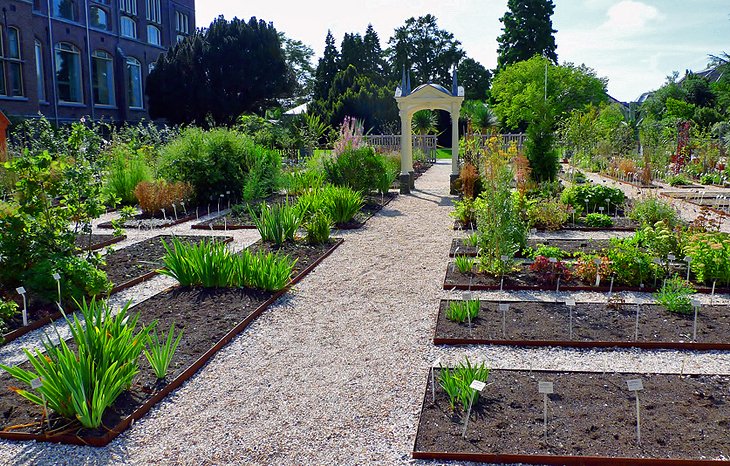
Part of the University of Leiden's Botanic Garden, Hortus Botanicus was originally laid out in 1590, making it one of the oldest such gardens in the world. More than 10,000 botanical species along with dozens of bird types are found here, many from far-flung corners of the globe. A highlight of this popular historic garden is the Clusiustuin, a reconstruction of the first systematically arranged botanical garden originally located behind the University building. Also worth a visit are the Winter Garden with its collection of cycads and carnivorous plants, the large ornate Orangery built in 1744, the Rosarium, and the Japanese Garden. English language guided tours are available with advance notice.
Address: Rapenburg 73, 2311 GJ Leiden

5 The Molen de Valk Windmill Museum

The Molen de Valk Windmill Museum
The Molen de Valk Windmill Museum Bart van Leeuwen
Share:
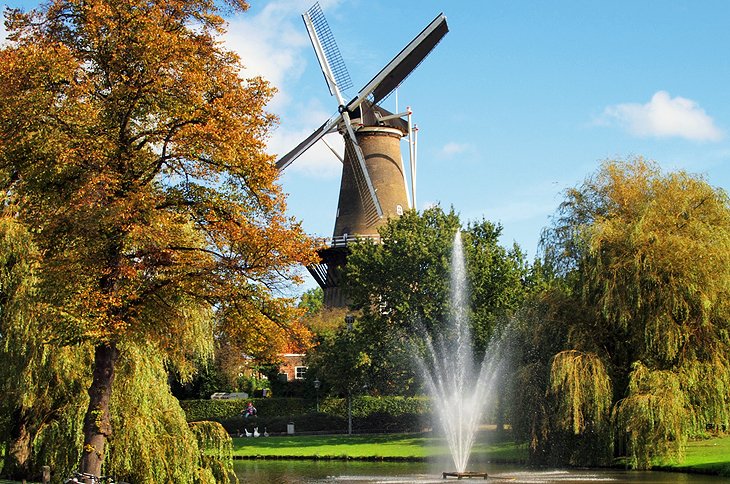
Leiden's Windmill Museum (Molen de Valk) is housed in a spectacular seven-story stone flour mill built in 1743. Literally translated as "the Falcon," this magnificent example of the ubiquitous Dutch windmill stands on high ground that originally formed part of the town's fortifications (in the early 17th century, 19 windmills were within the town walls). After restoration in 1964, Molen de Valk, along with the dwelling house of the last miller, was opened to the public as a museum. Highlights of a visit to this still-operational mill include displays and exhibits relating to the building's history, the story of milling, and numerous tools and artifacts. (Guided tours are available upon request.)
Address: 2e Binnenvestgracht, 1 2312 BZ Leiden

6 Museum De Lakenhal

Decorative tiles
Decorative tiles Hans Splinter
Share:
On the north side of the Oude Vest is Leiden's Municipal Museum (Museum De Lakenhal). Housed in the town's former Cloth Hall (Lakenhal) built in 1640 and used for its original purpose until 1800, the present museum was opened in 1874 and boasts an impressive collection of paintings by leading Dutch artists of the 16th and 17th centuries including Jan van Goyen, Rembrandt, and Jan Steen. Also interesting is the museum's collection of applied and decorative art. Other notable exhibits include the refurbished Inspection Room where cloth was inspected, along with a large collection of religious artifacts.
Address: Oude Singel 28 /32, 2312 RA Leiden

7 Naturalis Biodiversity Center

Ammonite fossil
Ammonite fossil Hans Splinter
Share:
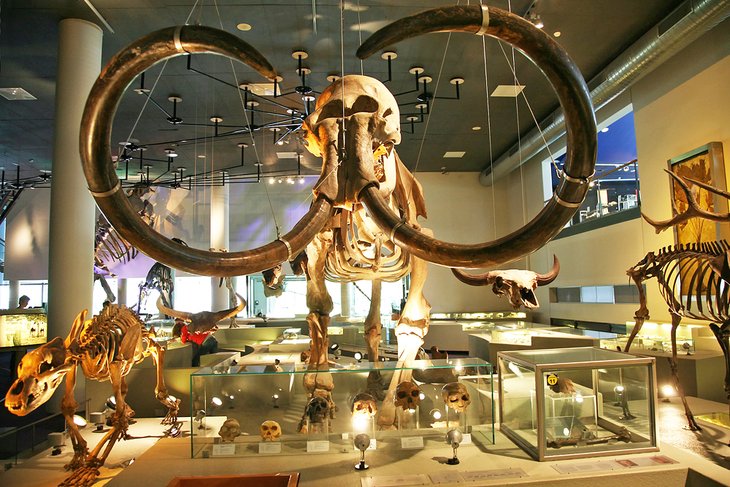
The Netherlands' national museum of natural history, the Naturalis Biodiversity Center, offers fascinating information and exhibits relating to nature. All told, this large museum houses more than ten million animal and insect specimens, along with rocks, minerals, and gemstones, all laid out in an easy to follow manner in departments such as the Nature Theater, which deals with animal and plant life, and Primeval Parade with its fascinating displays of fossils. For youngsters, many hands-on exhibits, including games and fun experiments, encourage a little learning while they play.
Address: Darwinweg 2, 2333 CR Leiden
Official site: www.naturalis.nl/en/

8 The National Museum of Ethnology

The National Museum of Ethnology
The National Museum of Ethnology Jan
Share:
Widely considered to be the first such museum in the world - rather than merely a collection of curiosities - Leiden's National Museum of Ethnology (Rijksmuseum Volkenkunde) is handily located near the Molen de Valk windmill and is a pleasant way to spend an hour or more. Founded in 1837, it was originally housed in a number of buildings spread across the town, until a new home was found for it in 1937 in the former University Hospital. Its extensive collections come from all over the world, with an emphasis on artifacts from Indonesia and Japan. Of particular interest is the Buddha Room with its collection of statues depicting the prophet in a variety of poses.
Address: Steenstraat 1, 2312 BS Leiden
Official site: www.volkenkunde.nl/en

9 The Leiden American Pilgrim Museum

Of particular interest to visitors from the USA is a small museum tucked away behind Hortus Botanicus known as the Leiden American Pilgrim Museum. Dedicated to the Pilgrim Fathers, the museum chronicles the group's flight from England for the safety of Amsterdam in 1608, and their eventual arrival in Leiden. Here, they remained until 1620 before beginning their epic voyage to North America via Southampton where they joined the Mayflower. The museum provides interesting material concerning Pilgrim life in the town, along with the history of the 14th-century home in which it's housed. Highlights include displays of furniture, books, and other materials from the period, along with maps and engravings.
Address: Beschuitsteeg 9, 2312 JT Leiden

10 St. Pieterskerk

St. Pieterskerk
St. Pieterskerk
Share:
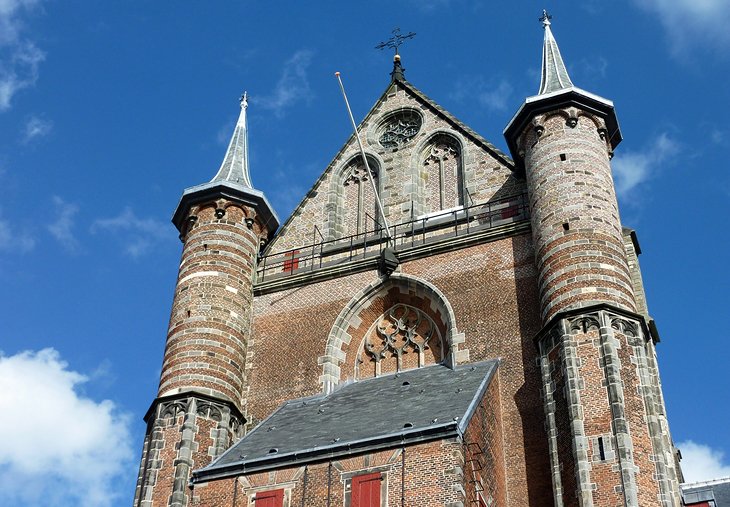
Famous for its annual celebration commemorating Leiden's liberation from the Spanish, the foundations of the Late-Gothic cruciform basilica that is St. Pieterskerk date from 1121 when the town's first church was built here. The current church was begun in the 13th century, with the choir being completed in 1339, and the nave with its double aisles added in the 14th century. Highlights include the building's timber barrel-vaulting extending to the west front, and the many monuments of various university professors. Of particular note is the tomb of John Robinson, a distinguished member of the group that was to become the Pilgrim Fathers; the Late-Gothic carved wooden altar dating from the early 16th century; and the organ built around 1640. For a truly unique experience, book a night in the adjoining Villa Rameau, a former 16th-century almshouse.
Address: Kloksteeg 16, Leiden, Zuid-Holland 2311 SL, Netherlands
Official site: www.pieterskerk.com/en/

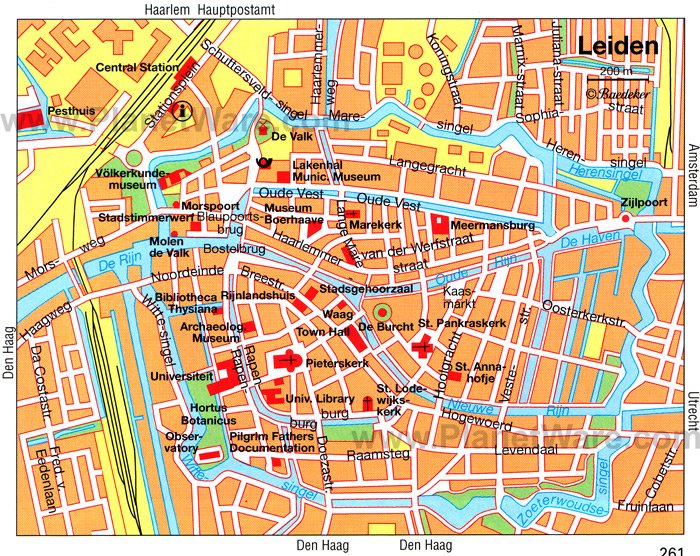
  • Leiden Map - Tourist Attractions Leyden Map - Attractions

10 Top Tourist Attractions in Groningen and Easy Day Trips, Netherlands


Groningen lies at the junction of the Hoornsediep and Winschoterdiep canals and has long been an important harbor for coastal shipping to the North Sea, just 20 kilometers away. The city has a rich history dating back as far as 1040 when Emperor Henry III granted the Bishop of Utrecht a fief in the town, together with the right to coin money. It later became a member of the Hanseatic League and developed into one of the leading commercial centers in northern Europe. The seat of a university founded in 1614, the city has long been a hotbed of creative talent, including being the birthplace of artists Jozef Israëls and WH Message, and is well known for its lively cultural scene. It's also a great place to explore by bike, and has long been known as "World Cycling City" thanks to its extensive network of cycle paths.


1 Martinikerk and the Martini Tower

Martinikerk and the Martini Tower
Share:
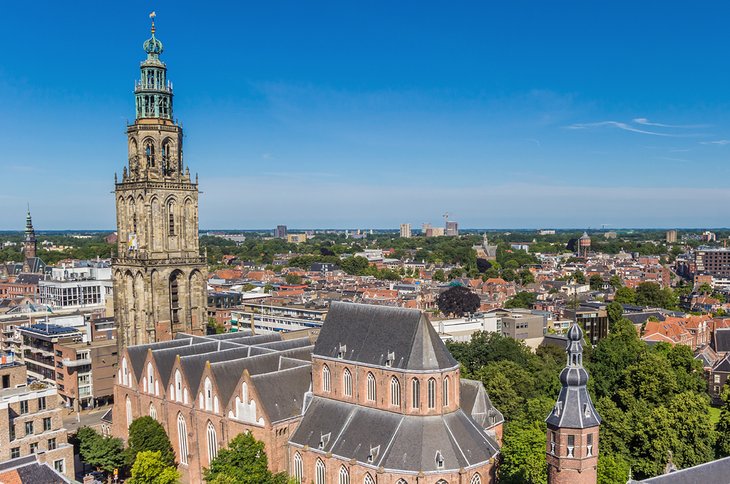
Martin's Church (Martinikerk), a lovely brick built Romanesque-Gothic basilica constructed in the 13th century, is one of Groningen's most important landmarks. Rebuilt in the 15th century, the old choir was replaced by one with tall Gothic vaulting and an ambulatory, while a chapel and sacristy were added to the north side. Interior highlights include 16th-century wall paintings in the choir, as well as the old organ built in 1480. Its most notable feature, however, is undoubtedly the church's tower, the Martinitoren (or Martini Tower to locals). Originally built in 1482 (and several times rebuilt), the 96-meter-tall tower is one of the highest in the Netherlands and offers great views over the city's Main Market Square (Grote Markt).
Address: Martinikerkhof 1, 9712 JG Groningen 

2 The Groninger Museum

Multicolored stairway
Share:
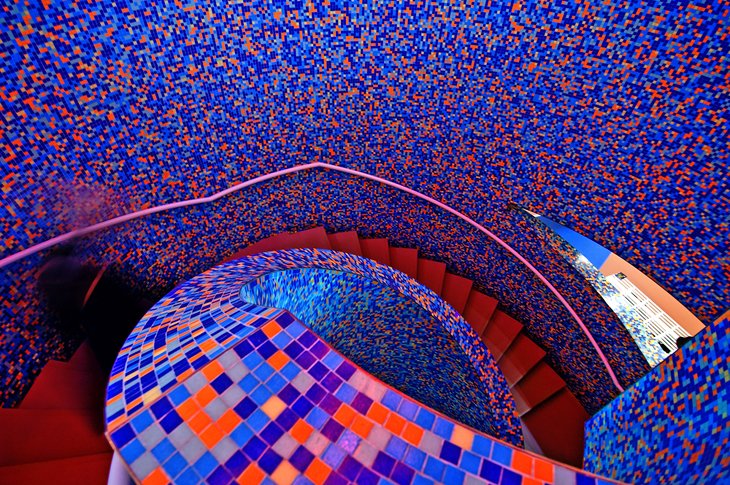
Founded in 1874, the Groninger Museum remains one of the most technologically advanced art galleries in the Netherlands. In a splendid post-modern building on the banks of the Verbindingskanaal, its three main pavilions host impressive exhibits of modern and contemporary art from both local and international artists, as well as works from the museum's standing collections. Highlights of its permanent collections focus on the history and culture of Groningen and include archaeological finds, portraits, regional arts and crafts, as well as applied arts. The collection also includes examples of Chinese and Japanese porcelain and paintings, works by the Groningen-born painters Jozef Israëls and Hendrik Willem Message, and the famous Groningen silver.
Address: Museumeiland 1, 9711 ME Groningen

3 Festival Parks: Noorderplantsoen

Groningen's City Park
Share:
Groningen has more than its fair share of open spaces to explore. One of the prettiest is the Noorderplantsoen, a long narrow park in the northern outskirts of the city with pleasant meandering pathways. Laid out on the site of Groningen's former fortifications in the style of an English garden, the old earth ramparts were incorporated into the landscape, as were the old moats, which were turned into a series of ponds. Numerous events are held in the park, including the annual Noorderzon Theater Festival each August. Another very pleasant park to explore is Groningen's City Park (Stadspark) opened in 1926 and home to an arboretum and numerous annual events and concerts.
Address: Binnenstad-Noord, Groningen

4 Noorderzon Performing Arts Festival

Noorderplantsoen
Noorderplantsoen 'scar Vilaplana
Share:
The highlight of Groningen's busy theatrical and musical festival season is the annual Noorderzon Festival. Held each year in the Noorderplantsoen, the city's main public park, this popular event attracts up to 150,000 visitors annually to experience numerous theatrical, dance, and music performances, along with literary events, visual arts presentations, dining, and plenty of other fun attractions. This 11-day festival has been held every third week of August since 1991, with its main events taking place in a variety of venues around the city, as well as in the streets around the park.

5 Groningen University and Museum

Groningen University and Museum
Share:
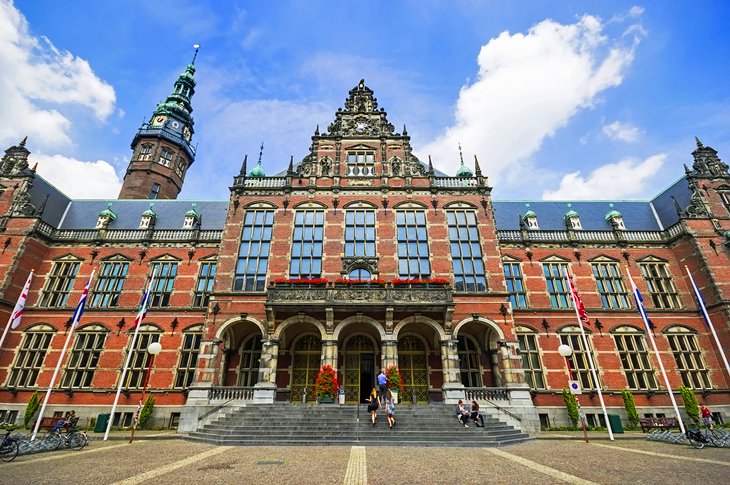
Founded in 1614, the Groningen University and its extensive grounds are worth exploring. A highlight is the main administrative building, an impressive Neo-Renaissance style structure erected in 1909 with a number of interesting allegorical figures on its façade. The University Museum, a first-rate science museum, is also worth visiting. Established in 1934, the museum features fascinating displays including an Egyptian mummy, the world's first electromagnetic car, as well as displays relating to astronomy and ethnology. (Fun English language guided tours of the museum are available and are conducted by university staff and students.)
Address: Pelsterstraat 23, 9711 KH Groningen

6 Groningen Old Town

Groningen Old Town
Groningen Old Town
Share:
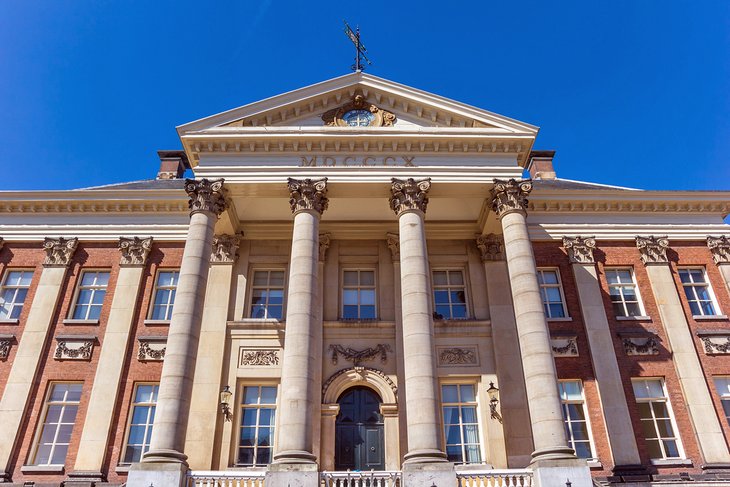
With its numerous bike- and people-friendly pathways and old squares, Old Town Groningen is a delightful place to explore. Highlights of a walking or cycling tour of the city's historic core include the magnificent early 19th-century Neoclassical Town Hall (Stadhuis) in the Grote Markt, and the superb Renaissance Gold Office (Goudkantoor) built in 1635. Also of interest is the Neo-Renaissance Provinciehuis, the seat of the provincial government. Notable interior features are the Hall of the States (Statenzaal) with its fine portraits from the 17th century, and the wood paneling and timber vaulting from 1697. Other highlights include Huis Cardinaal with its superb Renaissance façade from 1559 (it's also known as the House of the Three Kings for its medallions of Alexander the Great, King David, and Charlemagne on the gable) and Prinsenhof, a former 15th-century monastery with its lovely 17th-century rose and herb gardens.

7 Lauwersmeer National Park

Lauwersmeer National Park
Share:
Just 38 kilometers northwest of Groningen on the North Sea coast is Lauwersmeer National Park, one of the country's most popular recreational and conservation areas. Once known as the Lauwers Sea, after being separated from the Wadden Sea in 1969, its saltwater was gradually replaced by freshwater, bringing with it a variety of new flora and fauna. It has since become a popular recreation area boasting 50 kilometers of paths for walkers, as well numerous bike trails, including one 45-kilometer leg that travels through many beautiful scenic areas and picturesque villages. Water sports enthusiasts are also spoiled for choice with such fun activities as sailing, canoeing, and kite surfing, while bird watching has become increasingly popular with many dedicated hides and lookouts being added over the years.
Address: De Rug 1, 9976 VT Lauwersoog

8 The Fortified Village of Bourtange

The Fortified Village of Bourtange
Share:
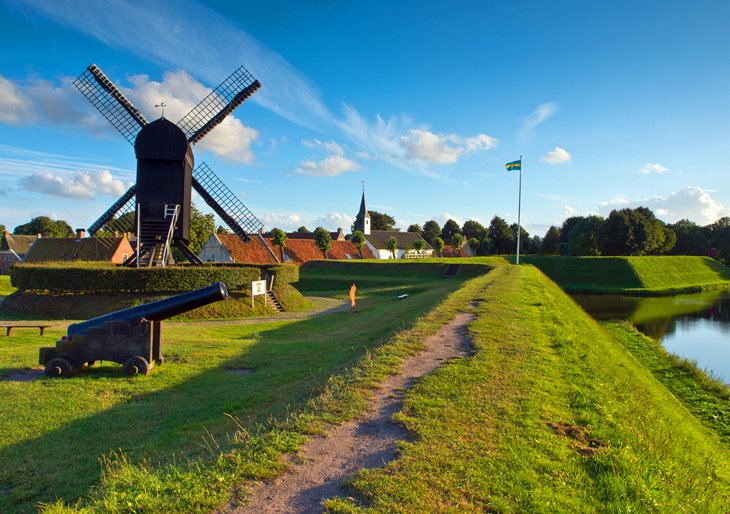
Just 61 kilometers due east of Groningen and close to the border with Germany, the fortified old village of Bourtange is a remarkable feat of engineering. Built in 1593 and used as a fort until 1851, the entire village viewed from the air resembles a huge star, its outline marked by a series of moats and waterways. Now a wonderfully preserved open-air museum, the village looks just as it would have in the 18th century, and boasts many excellent things to see, including a collection of cannons (still fired on special occasions), the fun Museum Railway Line with its steam locomotive, and special events such as markets and fairs.
Address: W Lodewijkstraat 33, 9545 PA Bourtange

9 The Northern Shipping Museum

Groningen boats
Groningen boats
Share:
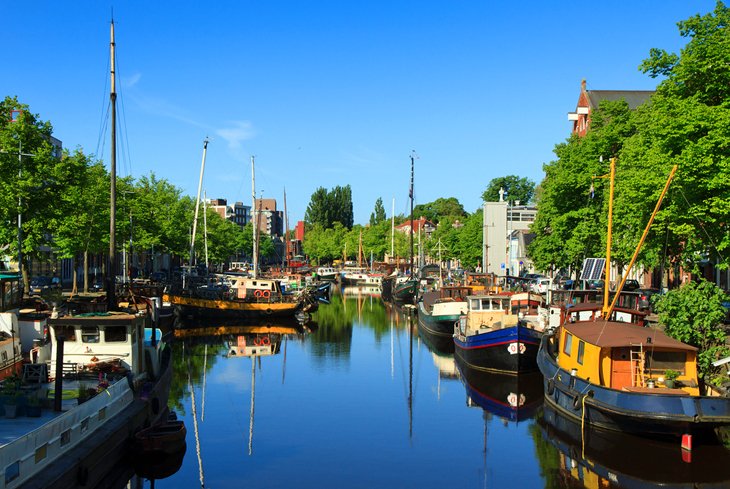
The Northern Shipping Museum (Noordelijk Scheepvaartmuseum), housed in two interesting old medieval buildings known as Gotisch Huis and Canterhuis, provides a fascinating glimpse into Groningen's rich maritime history. The collection was founded in the 1930s and illustrates the history of inland and coastal shipping and fishing since Roman times, as well as shipbuilding, with numerous ship models, paintings, photos, parts of old ships, and navigational instruments.
Address: Brugstraat 24, 9711 HZ Groningen

10 Entertainment and Events

Music Concert, Groningen
Music Concert, Groningen Victor van Werkhooven
Share:
In addition to outdoor events such as the Noorderzon Performing Arts Festival, Groningen is also a popular year-round destination for visitors due to its vibrant arts and cultural scene. Much of the activity takes place in and around the City Theater (Stadsschouwburg) in the Turfsingel, as well as concert venues such as Martini Plaza. Here, you'll see everything from modern theatrical productions to musical concerts of all genres, including pop and jazz, the latter particularly popular due to the presence in the town of a music school whose students regularly hold impromptu jam sessions. A particular highlight is the Eurosonic Festival, a huge music event attracting more than 100 bands from across the continent.

Day Trips from Groningen

Leeuwarden

Leeuwarden
Leeuwarden
Share:
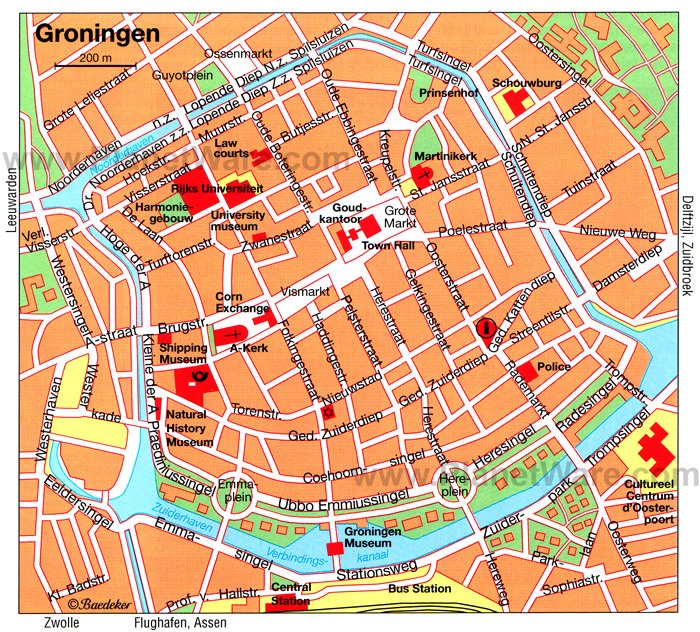
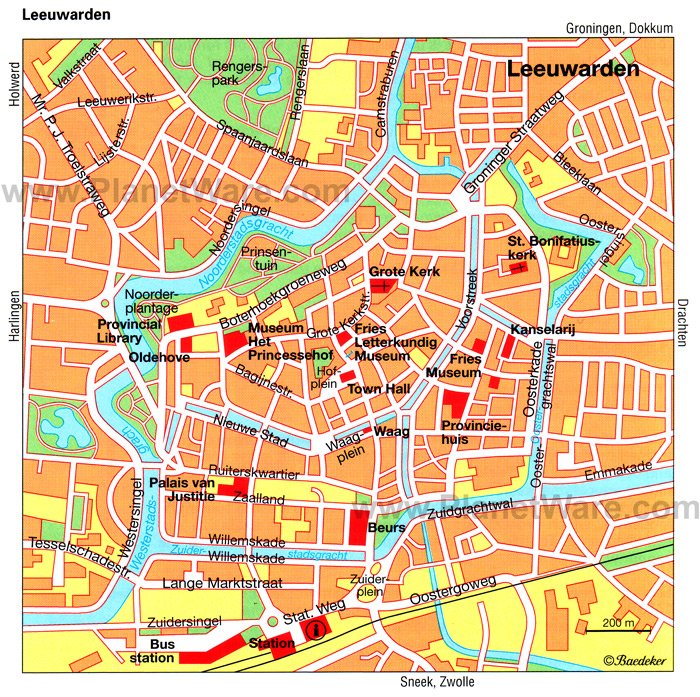
About 45 minutes' drive west of Groningen is Leeuwarden, the old capital of Friesland, famous for its historical architecture and for being the birthplace of WWI spy and dancer, Mata Hari. It's a pleasant town to explore on foot, beginning with the old fortified part of town with its ring of canals. A highlight here is the Wirdumerdijk, a busy shopping street where you'll find old Weigh House (Waag) built in 1598, a handsome building in Renaissance style in which butter and cheese were sold until 1884. Other notable old buildings include the Law Courts (Paleis van Justitie) from 1852 with an imposing doorway flanked by columns, and the 16th-century Het Hof, the former residence of the Stadholder and later of the Queen's Commissioner. The Princessehof Ceramics Museum is also well worth visiting and includes a collection of ceramics and rare Chinese porcelain. Leeuwarden Map - Tourist Attractions Leeuwarden Map - Attractions Groningen Map - Tourist Attractions Groningen Map - Attractions

10 Top-Rated Tourist Attractions in Delft, Netherlands


Delft lies on the River Schie between Rotterdam and The Hague, its picturesque Old Town ringed by canals and home to many churches and old houses. In addition to being a university city, it has long been associated with trades and industry, in particular the manufacturing of Delftware, a world-famous form of pottery that has been around since the 17th century and is now experiencing a comeback (much of the town's most significant architecture dates from the 1700s when the pottery's popularity was at its peak). Delft is also well known as the birthplace of 16th-century scholar and statesman Hugo Grotius; painter Jan Vermeer, whose famous View of Delft is in the Mauritshuis in The Hague; and 17th-century scientist Antoni van Leeuwenhoek. Today, the city is a vibrant cultural and tourist hub, home to many fine museums and numerous entertainment opportunities.


1 New Church

New Church
New Church
Share:
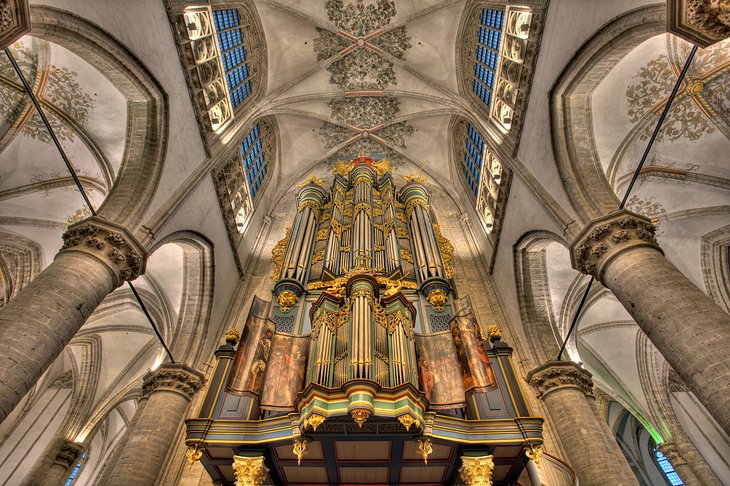
In Delft's spacious Market Square (Markt), the majestic New Church (Nieuwe Kerk) is, in fact, anything but new. Built between 1396 and 1496, this splendid church's Gothic tower rises 108 meters above the large square, offering great views and pleasant chimes from its 17th-century carillon. Of note is a monument to King William I, who died in Berlin in 1843, as well as a memorial relief of Prince Frederick William of Orange, who died in 1799. A marble monument of Hugo Grotius, along with his burial place, can also be visited. The church's most important feature, however, is the magnificent tomb of William I of Orange (William the Silent), one of the great masterpieces of Dutch Baroque sculpture made by Hendrick de Keyser between 1614-21. Richly decorated under a white canopy borne on black marble columns is a white figure of William surrounded by bronze allegorical figures including Justice (with scales), Freedom (with scepter and hat), Valor (clad in a lion's skin), and Faith (with a book and a model of a church). In a vault below the tomb 41 princes and princesses of the house of Orange are buried (including Queen Wilhelmina, who died in 1948).
Address: Markt 80, 2611 GW Delft

2 Editor's Pick Koninklijke Porceleyne Fles

Koninklijke Porceleyne Fles
Koninklijke Porceleyne Fles Randolph Croft
Share:
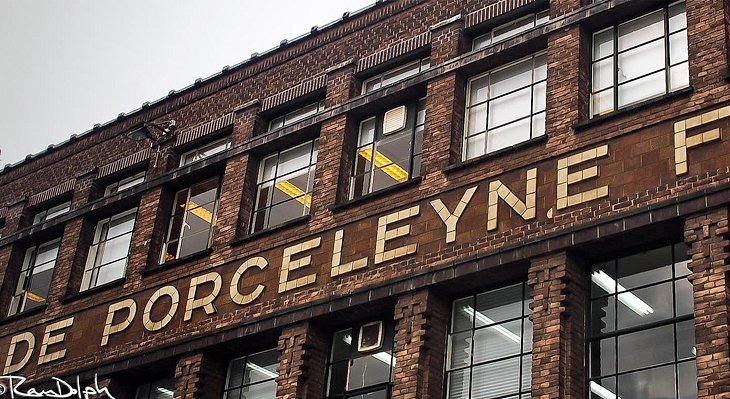
De Porceleyne Fles - manufacturer of Royal Dutch Delftware - was established in 1653 and is the last remaining maker of this world-famous pottery (all told, there were 32 such manufacturers in the area in the 17th century). This superb attraction provides a fascinating look at the history and production process of Blue Delftware, which is hand painted to strict, centuries-old standards. A highlight of a visit is watching the painters in action, followed by a visit to the factory, along with a chance to view their historical collections. A number of fun packages are available that combine a visit with a cruise along the nearby canals, painting workshops, afternoon teas, and tours (English language guides are available).
Address: Rotterdamseweg 196, 2628 AR Delft

3 The Old Church

The Old Church
The Old Church
Share:
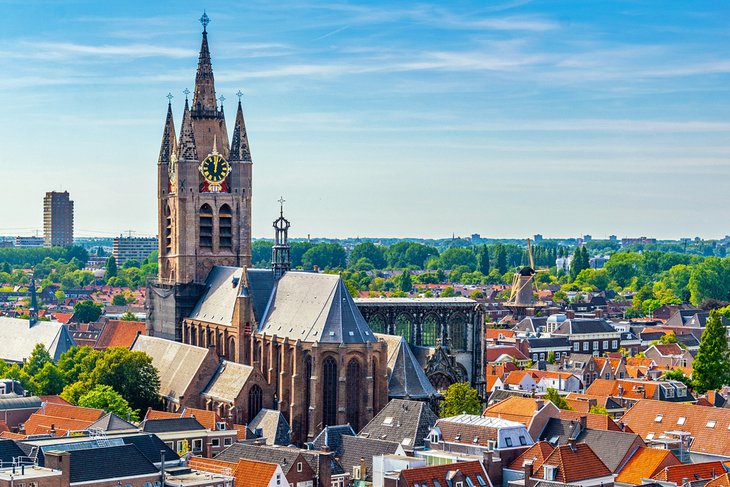
Delft's Old Church (Oude Kerk) was built around 1250 and is notable for its slightly leaning tower, along with its fine timber vaulting from 1574. The tower was rebuilt in 1450 in a style characteristic of the Coastal Gothic movement so popular in northern Europe, and is notable for its distinctive four corner turrets around the pyramidal roof. The church contains a number of important works of art, including a carved pulpit from 1548; the marble tomb of Admiral Piet Hein, famous for having captured the Spanish silver fleet in 1628; and the tomb of Admiral Maarten Tromp, who commanded the Dutch navy in 32 naval battles during the 17th-century. Famed Dutch painter Jan Vermeer is also buried in the church.
Address: Heilige Geestkerkhof 25, 2611 HP Delft

4 The Prince's Court and Prinsenhof Museum

The Prince's Court and Prinsenhof Museum
Share:
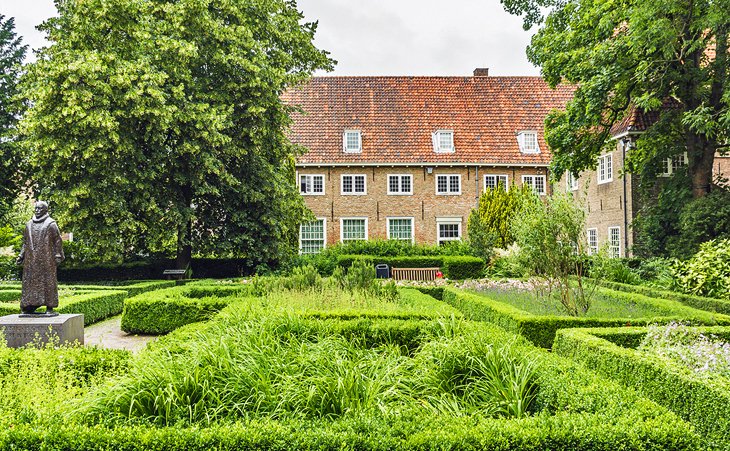
One of the most attractive corners of Delft, Prinsenhof consists of a picturesque group of buildings built around 1400 as the nunnery of St. Agatha. Secularized after the Reformation, it was the residence of the Princes of Orange until the seat of government moved to The Hague in the 16th century. As beautiful as the buildings are, they stand as a reminder of one of the bleaker moments in Dutch history, for it was here that William the Silent was assassinated in 1584 (the mark of the bullet that killed him can still be seen, and a statue to the slain leader stands in the center of the courtyard). Of special interest is Prinsenhof Museum (Stedelijk Museum het Prinsenhof) devoted to the country's 80 years of war with Spain from 1568-1648. Numerous items of local interest are also here, including portraits of members of the House of Orange and displays illustrating the history of Delftware. In the oldest part of the convent is a unique two-story cloister dating from 1430.
Address: Sint Agathaplein 1, 2611 HR Delft

5 Delft City Hall

Delft City Hall
Delft City Hall
Share:
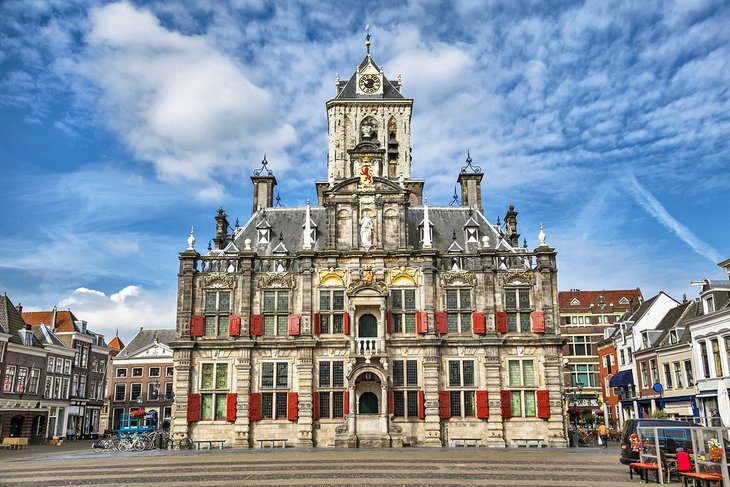
On the west side of the Markt is the Renaissance Delft City Hall (Stadhuis). Rebuilt in the 17th century on the site of the original 13th-century Town Hall, this impressive structure retains one surviving component of its predecessors: the 15th-century stone tower known as Het Steen, richly decorated with pilasters and sculptures and a small gable with a figure of Justice. Interior highlights are its many handsomely decorated rooms, including the Orange Gallery and the Council Chamber, along with fine paintings from the 16th to 18th centuries. Behind City Hall is the old municipal Weigh House (Waag), now the Municipal Theater, and the adjoining Meat Hall (Vleeshal), easily identified by its two ox heads.

6 The Lambert van Meerten Museum

Gemeenlandshuis
Gemeenlandshuis Dennis Jarvis
Share:
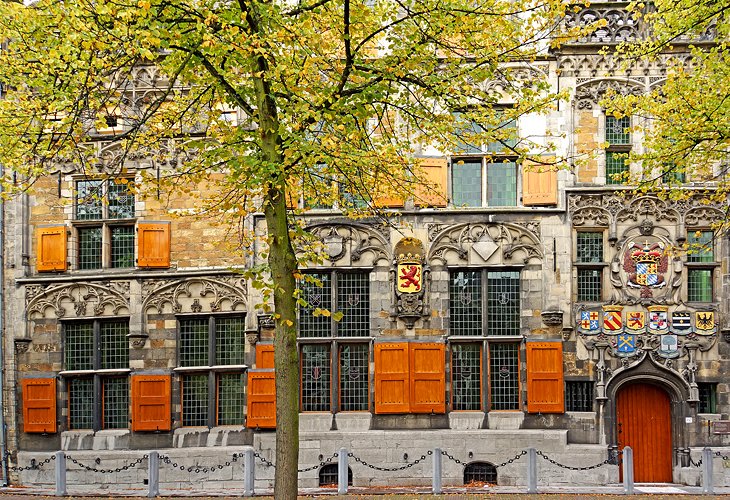
The Lambert van Meerten Museum is home to an important collection of applied art, as well as period furniture, paintings, and an extensive display of Delftware. Housed in the former home of the city's best known collector of antiquities and art, Lambert van Meerten, the museum opened in 1909 and also contains impressive collections of Chinese porcelain and Dutch tiles. Afterwards, stroll over to the Dyke Office (Gemeenlandshuis), built in the early 15th century and notable for its lovely stone gable decorated with numerous coats of arms.
Address: Oude Delft 199, 2611 HD Delft

7 The Old Canal (Oude Delft)

The Old Canal (Oude Delft)
Share:
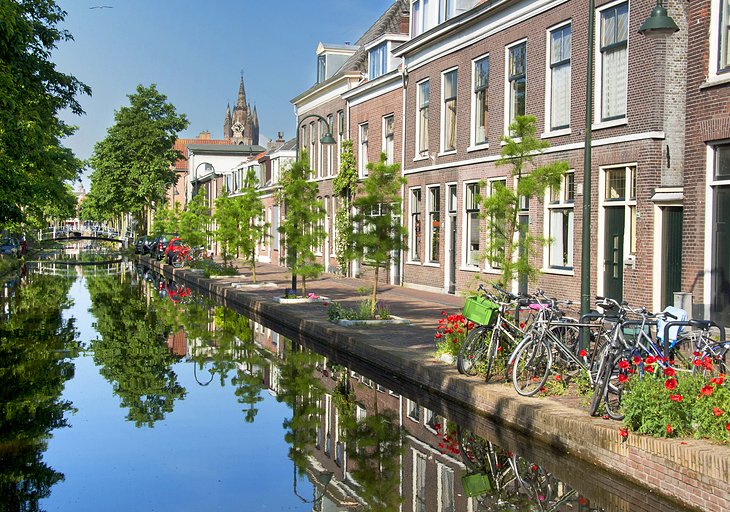
Just a short walk from the attractions around the Old City of Delft is the Old Canal (Oude Delft). Traversing the city from north to south, this lovely stretch of water is lined with many picturesque houses and is fun to explore on foot or by bike. Other interesting old houses can be seen in the neighboring Voorstraat, Hippolytusbuurt, Wijnhaven, and Koornmarkt, many of them overlooking stretches of the Old Canal. Also of note is the Begijnhof with its Late Gothic tower and a Baroque "hidden church" built by Daniël Marot in 1743 in which Catholics worshipped in secret during times of persecution.

8 The Eastern Gate (Oostpoort)

The Eastern Gate (Oostpoort)
Share:
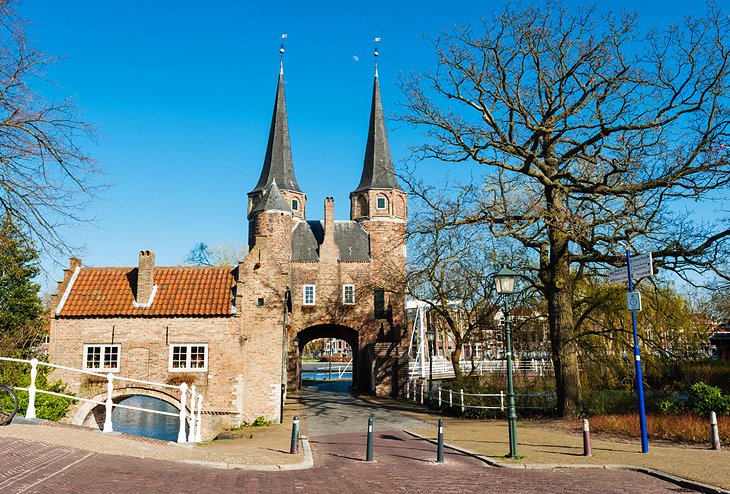
Along the East End Canal (Oosteinde Canal) is the picturesque old Eastern Gate, or Oostpoort. Located at the junction of a number of canals at the southeast corner of the old town, the building's twin towers were constructed around 1400 and enlarged in the 16th-century with the addition of octagonal upper stories and pointed roofs. Although privately owned, it's possible to wander around the building's exterior with its wonderful canal views.

9 Museum Paul Tétar van Elven

In the historic Koornmarkt area, the Paul Tétar van Elven Museum contains an impressive collection assembled by the 19th-century Dutch painter and teacher. With its old furniture and exquisite Delft tiles, the artist's studio is one of the country's best-preserved historic interiors. Highlights include a number of exquisite artworks, many framed in groups and collages, some of them originally presented to Dutch royalty.
Address: Koornmarkt 67, 2611 EC Delft

10 Science Centre Delft

On the grounds of the University of Technology (founded in 1863), Science Centre Delft is great for those traveling with kids. Housed in one of the university's historical older buildings - this one dating from 1911 - the Science Centre offers numerous hands-on activities, from testing experimental model racing cars and airplanes to the fun Dyke Patrol simulator (yup, plugging holes in dykes is fun!) and a fascinating virtual reality surgery simulator. Equally interesting are the open workshops where you can interact with students working on a variety of projects.
Address: Mijnbouwstraat 120, 2628 RX Delft
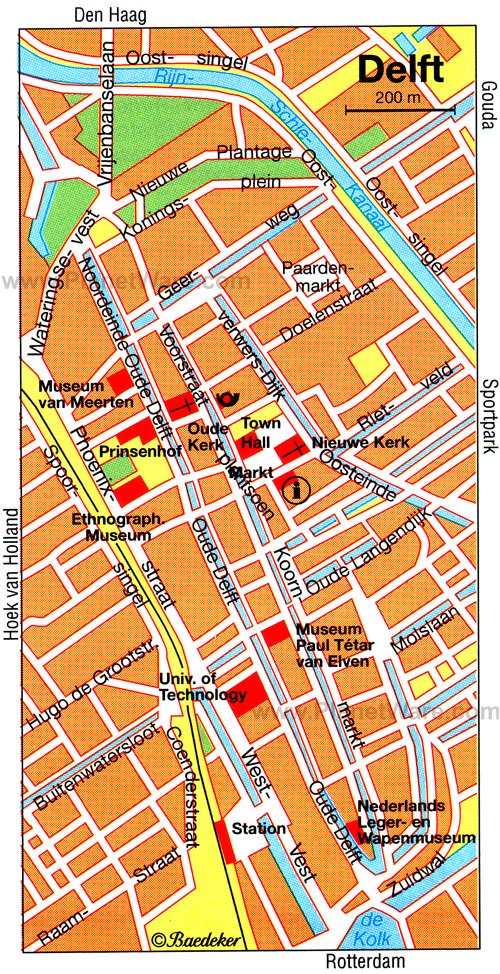
Delft Map - Tourist Attractions Delft Map - Attractions
10 Top-Rated Tourist Attractions in Breda


The city of Breda lies near the Belgian frontier in western Noord-Brabant, at the junction of the rivers Mark and Aa. A cultural center with numerous research and educational institutions, Breda has become an important tourist destination thanks to its historic city center with many attractive old buildings and moats. Breda rose in importance in the 12th-century due to the protection of its castle, and from the late Middle Ages onwards played an important role in the history of the Netherlands. Fortified in 1534, it withstood numerous sieges, and the Compromise of Breda in 1566 marked the beginning of the successful revolt against Spanish rule, while the Peace of Breda in 1667 ended the second naval war with Britain and recognized Dutch ownership of the East Indies. The town's fortifications again played an important role during wars with the French in 1793-95 and 1813, and today offer just one of many great reasons to explore this historic old city.


1 Grote Kerk

Grote Kerk
Grote Kerk
Share:
Built in 1290 in Gothic style, Grote Kerk (Onze-Lieve-Vrouwekerk) also shows later Renaissance influences, most noticeably in the choir. The church's magnificent 97-meter tower, completed in 1509, dominates the city, while interior features of note include its Late Gothic choir stalls carved with scenes satirizing the clergy and a copper font made in 1540 by Joos de Backer of Antwerp. Other highlights are its impressive organ and the large painting above it of St. Christopher from around 1500. Be sure to visit the imposing 16th-century Renaissance tomb of Count Engelbrecht II of Nassau and his wife. This fine alabaster masterpiece is one of a number of tombs in the ambulatory, including the monument of Count Engelbrecht I and his son, who died in 1443 and 1475, respectively.
Address: Kerkplein 2, 4811 XT Breda 

2 Breda Castle

Breda Castle
Breda Castle
Share:
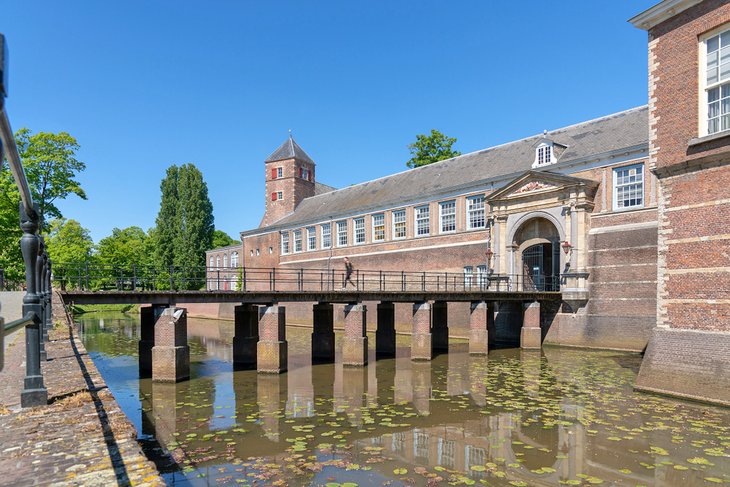
Breda Castle (Kasteel van Breda) first appears in official records in the 12th century and has played an important role throughout the city's history. Several times pulled down and rebuilt, the present castle - the ancestral home of the Counts of Orange-Nassau - was built in 1530 by Count Henry III, tutor and counselor to Emperor Charles V, and later extended by King William III. Henry later commissioned the old fortified castle to be converted into a handsome modern palace, and one of Prince William I's sons was the first member of the family to live in the palace. Of particular note are the two towers, the Spanjaardsgat and the Blokhuis, and the palace grounds, entered by the Stadhouderspoort.
Address: Kerkplein 10, 4811 XT Breda 

3 Editor's Pick Begijnhof and the Beguines

Begijnhof church
Begijnhof church
Share:
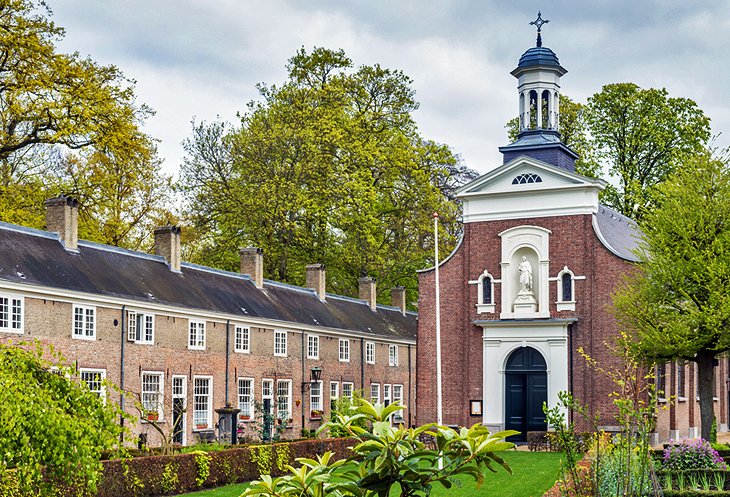
The Begijnhof, a district settled by an order of Catholic women known as the Beguines, was established in 1836 (the group itself can trace their roots back to the 13th century). The community's two churches and each of the 29 little houses survived WWII unscathed, and along with the central herb garden with its hundreds of different species of plants, makes for a very pleasant outing (a small museum is also on site). Also of interest is nearby Valkenberg Park, home to the Nassau Barony Monument built in 1905. Designed by well-known architect PJH Cuypers, the monument shows the coats of arms of 20 communes in the surrounding area, along with the lion of Nassau with a royal crown, sword, and heraldic shield.
Address: Catharinastraat 45, 4811 XE Breda

4 Spaniard's Hole

Spaniard's Hole
Spaniard's Hole
Share:
In Breda's Cingelstraat is the remarkable Spanjaardsgat, or Spaniard's Hole, a large water gate flanked by twin towers - the Granaattoren and the Duiventoren - and a length of wall. It was here, according to legend, that Adriaan van Bergen and 70 men slipped into the town and recaptured it from the Spaniards (although the story is a little suspect as the structure wasn't completed until 1610, some years after the city's liberation). Also worth visiting is Breda's Port Quarter, where a number of handsome old storehouses still stand, along with the remains of the Gasthuispoort, one of three of the town's medieval gates.

5 Ginneken and Castle Bouvigne

Castle Bouvigne
Castle Bouvigne
Share:
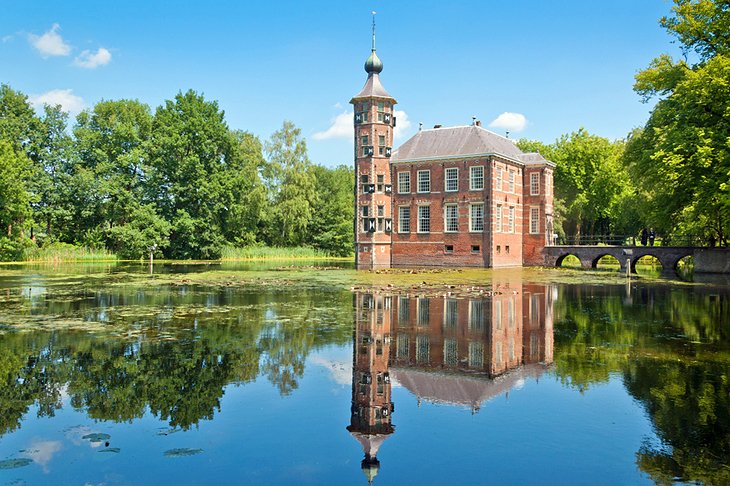
Just three kilometers south of Breda in the quaint village of Ginnekin is the attractive old Castle Bouvigne, a 15th-century fortress famous for its superb moat and its mix of French, English, and German-style gardens. Part of the original defenses of Breda, the castle was purchased by William I's son, Prince Frederick Henry, in 1614, who made it his headquarters during the siege of Breda in 1637. A stroll around the estate's lovely gardens (open to the public) is time well spent.
Address: Bouvignelaan 5, Breda

6 Old Town Breda

Old Town Breda
Old Town Breda
Share:
Breda's picturesque Old Town center is a wonderful place to explore, day or night. Surrounded by a ring of canals is the Grote Markt, home to the majestic Grote Kerk and the 18th-century Town Hall (Stadhuis). The oldest part of the Town Hall is the Great Hall, along with the adjoining Little Town Hall (Cleyn Raedthuys). Built in 1767 by combining three adjoining houses to create a unified façade, the building was further expanded in 1898 and again in 1925 with the addition of the Council Chamber with its impressive stained glass. Highlights of a visit include a chance to see a copy of Velázquez's famous painting, Surrender of Breda, and the garden with its old coach-shed (now a conference room). Another attraction, just a few minutes walk northeast of the Grote Kerk, is the Kasteelplein with its old buildings and equestrian statue of William III of Orange.

7 St. Janskathedraal, 's-Hertogenbosch

St. Janskathedraal, 's-Hertogenbosch
Share:
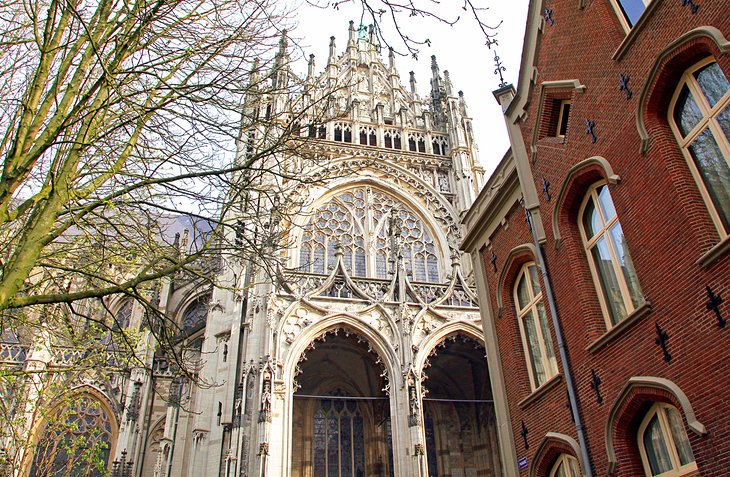
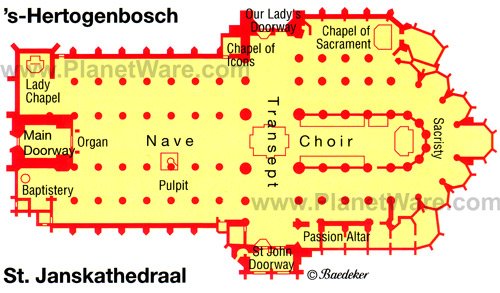
About 50 kilometers east of Breda is the city of 's-Hertogenbosch, capital of the province of Brabant and home to one of the most attractive churches in the Netherlands, St. John's Cathedral (St. Janskathedraal). Built between 1280 and 1312, this splendid Roman Catholic cathedral was given its present Gothic form between 1380 and 1530. Notable not only for its size - it's 115 meters long by 62 meters wide, making it the largest church in the Netherlands - highlights include the ring of seven chapels built between 1480-96 around the choir, along with its rich medieval sculptures and stained glass. Also noteworthy is the 13th-century painting of Our Sweet Lady of Den Bosch in the Lady Chapel, as well as the numerous carved figures of saints, and reliefs of the life of John the Baptist. Other highlights include the carved Renaissance pulpit from 1566, the large organ from 1635, the baptistery with its fine copper font from 1492, and the exquisitely carved choir stalls from 1480.
Address: Torenstraat 16, 5211 KK 's-Hertogenbosch 's-Hertogenbosch St Janskathedraal - Floor plan map 's-Hertogenbosch St Janskathedraal Map

8 The Breda Museum

Begijnhof cloister courtyard
Begijnhof cloister courtyard Kristina D.C. Hoeppner
Share:
On the south side of the Grote Markt is the old Meat Hall, or Vleeshal (look for the handsome 17th-century sandstone doorway). Together with the adjoining building once occupied by the Marksmen's Guild of St. George, the Meat Hall now houses the Breda Museum, the city's municipal collections. Highlights include numerous permanent exhibits dealing with the art and history of Breda, along with a varied program of interesting temporary exhibits. The Breda Museum also operates a number of satellite collections, the most interesting being the Begijnhof Museum with its history of the city's Beguine community, and Museum de Kerkschat with its important religious relics.
Address: Chassépark Breda, Parade 12, 4811 DZ Breda

9 Baarle-Nassa and Baarle-Hertog: A Tale of Two Towns

Baarle border
Baarle border Alix Guillard
Share:
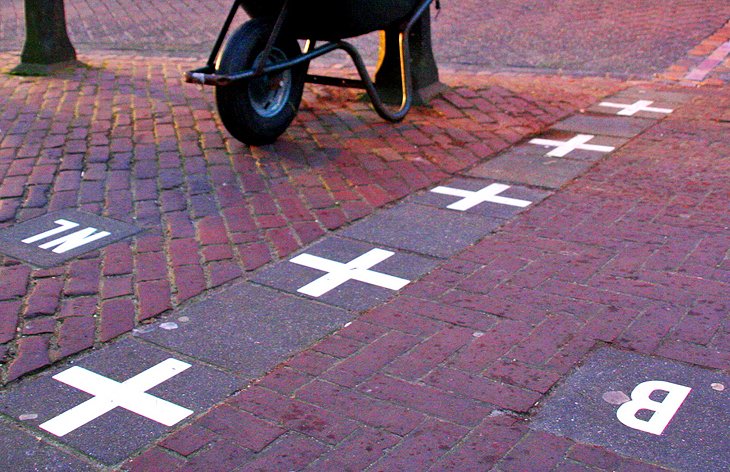
About 21 kilometers to the southeast of Breda is the town of Baarle-Nassau, famous for being twinned with Baarle-Hertog, a Belgian enclave in Dutch territory that's been separated from Baarle-Nassau since the 15th century. It's a fascinating place to visit and includes unique experiences such as having a coffee break in the Netherlands and afterwards visiting the cafés washroom, no more than few feet away, in Belgium (without even leaving the building). Markers showing this rather confusing border are located throughout both towns, dissecting roads, houses, and restaurants, sometimes with the structure's national affiliation being determined only by the position of the front door. (All told, 21 such enclaves exist in the Netherlands, while eight Dutch enclaves can be found in Belgium.)

10 The Mastbos

The Mastbos
The Mastbos
Share:
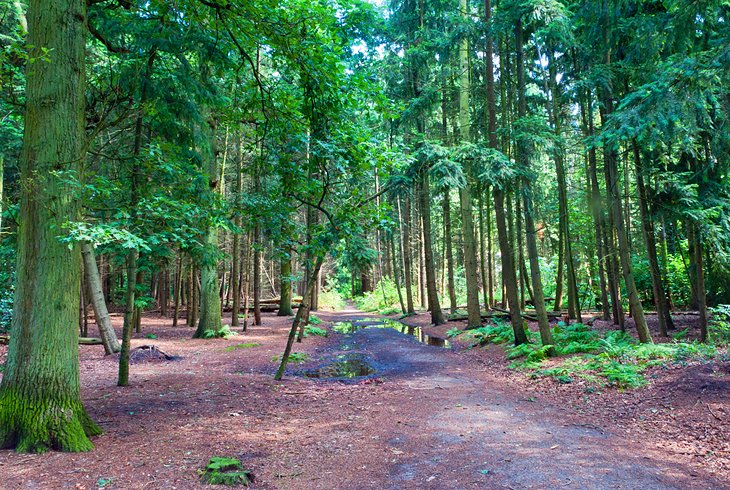
Just a few kilometers south of Breda, near Bouvigne Castle, is the Mastbos, a beautiful wooded park of more than 1,250 acres that has become one of the region's most popular recreation spots. Taking its name from its many tall pines - they were for centuries used for the masts of the Dutch and Spanish fleets - Mastos is one of the country's oldest forests and has been tended and replanted numerous times through the centuries, including 1505 when Scots Pine were planted. Once a popular hunting ground for the aristocracy, the park is now all about the walking trails through the rich flora and fauna, with numerous beautiful views making it a perfect picnic spot.
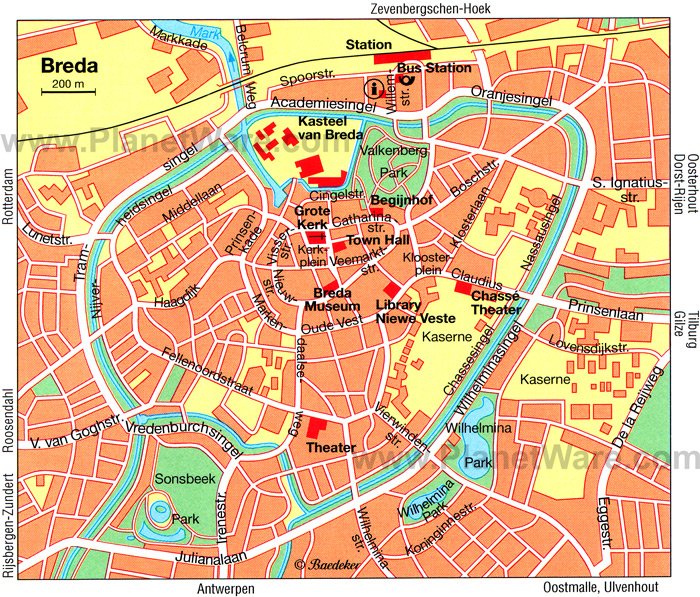
Address: Mastbos, Breda Breda Map - Tourist Attractions Breda Map - Attractions